

Yes, online English lessons can be effective for children, but the screen itself is not what makes them work. The important questions are whether the teacher understands the child’s level, gets them actively using English, explains clearly and responds to what they need. A live lesson should feel like guided interaction, not an hour of watching slides.
What the evidence says about learning online
The Education Endowment Foundation reviewed research on remote learning and concluded that teaching quality matters more than the way a lesson is delivered. Its summary highlights clear explanations, feedback, access to suitable technology, opportunities for interaction and support for independent learning. It also notes that different remote approaches suit different pupils and content.
That is a useful way to judge an online English class. Video quality and colorful activities help, but they cannot replace a teacher who notices confusion, adjusts the task and gives the child enough time to speak. Cambridge English similarly presents online teaching as something that needs careful planning to be safe, engaging and effective.
What makes an online English lesson effective?
The right level and a clear purpose
A useful lesson begins from what the child can already understand and do. The teacher should have a small, visible goal, such as describing a routine, asking follow-up questions or using a set of words in conversation. An activity may be fun, but it should still lead toward that goal.
Active use of English
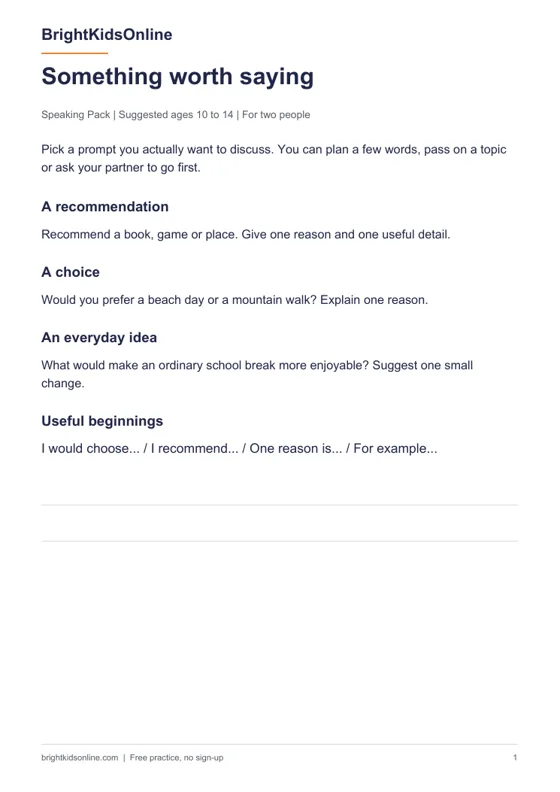
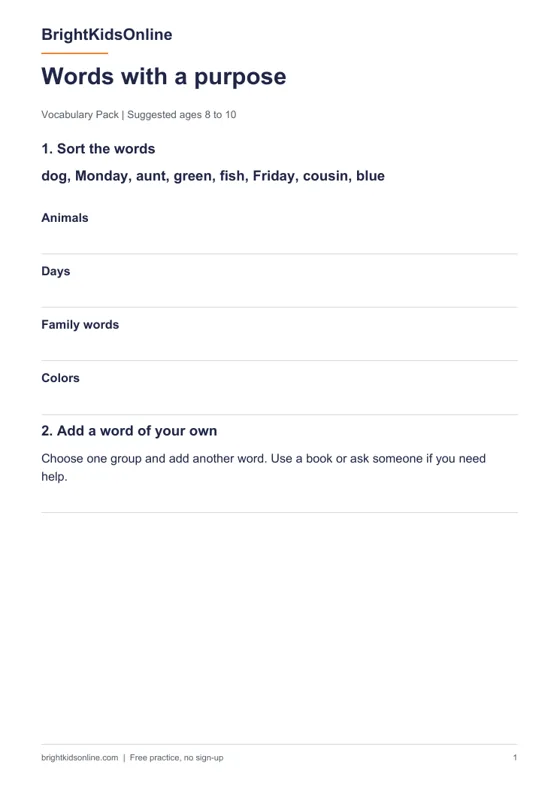
Language develops through use. Children can sort pictures, move objects, play a role, read a short exchange, solve a clue or explain an opinion. A good task gives them a reason to listen and respond. For hesitant speakers, the teacher can begin with choices and sentence frames, then gradually remove the support.
Variety without constant distraction
Children need changes of pace, especially online. That might mean moving from a short conversation to a visual game, then reading or drawing. It does not mean opening a new app every two minutes. Too many tools can take attention away from the language and make technical problems more likely.
Specific, kind feedback
“Good job” is encouraging, but children also need to know what worked and what to try next. Useful feedback might be: “You used the past tense clearly. Now let’s add when it happened.” Correction should support the current goal without interrupting every sentence.
Private lesson or small group?
A private online lesson allows the teacher to adapt the pace, topics and support closely. It can suit a child with a specific need, a beginner who requires more preparation time or a learner who speaks more freely one to one. A small group adds peer conversation, turn-taking and the chance to hear different answers. It can be motivating when every child has room to participate and the activities invite them to listen and respond to one another.
Neither format is automatically better. Ask what your child needs now. A sociable child may enjoy the energy of a group. A child who shuts down in front of peers may benefit from private support first. My guide comparing one-to-one and small-group English lessons goes into this choice in more detail. I offer private English lessons and small-group English lessons for children. My groups include three to five children.
Does age matter for online English lessons?
Children from 6 to 14 can learn online, but one lesson format will not suit every age. A younger child may need visible objects, movement and short activity stages. An older child can take on problem-solving, longer stories, interest-based projects and conversations that give them real choices and opinions.
Attention also varies within an age group. A responsive teacher changes the pace when a child is tired or when an activity is too easy. In my lessons, games and visuals are tools for conversation, not decoration. I adapt them to the child instead of following a fixed set of slides.
Prepare a simple home setup
- Use a device with a working camera, microphone and stable connection.
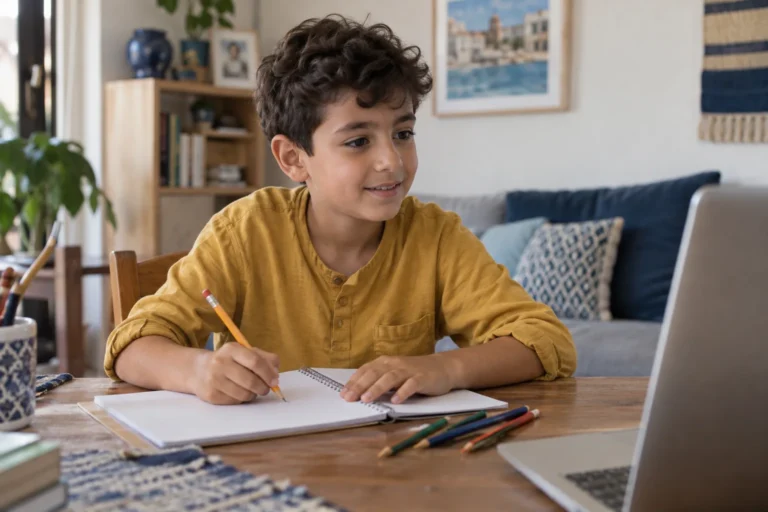
- Place the screen at a comfortable height in a reasonably quiet space.
- Keep paper, a pencil and any requested objects within reach.
- Join a few minutes early for the first class so sound can be checked.
- For younger children, remain nearby for technical help without answering for them.
A parent does not need to become the second teacher. Once the child is comfortable and safe, give them space to build a direct relationship with the teacher. After class, a short conversation about what they used is enough.
How to judge whether lessons are working
Agree on realistic goals and look for evidence over time. Your child may understand instructions with less help, answer in longer phrases, read a familiar type of text more independently or use vocabulary outside class. Ask the teacher what the current focus is and how home practice can stay brief.
Be cautious of promises of instant fluency or guaranteed grades. Progress depends on the child’s starting point, attendance, practice and individual needs. If you are considering online lessons, a free introductory session is a sensible way to check the technology, teaching style and your child’s comfort before deciding.
Sources
Common questions
What parents often ask
They can be effective when teaching is clear, interactive and matched to the child’s level. The teacher should create frequent opportunities to use English, check understanding, adapt tasks and provide useful feedback.
It depends on the child. Private lessons allow close personalisation, while a well-managed small group adds peer conversation and turn-taking. Choose according to the learner’s level, confidence and preferred way of participating.
Children ages 6 to 14 can learn online when lesson length, pace, topics and activities suit their development. Younger children usually need shorter activity stages and some nearby technical support.
Use an introductory lesson to observe whether your child feels safe, participates often and understands the teacher. Ask what they did and what they would like to repeat, then discuss the level and next goals with the teacher.