
You do not need to speak fluent French to be helpful. Your most valuable role is to make practice possible, regular and safe. You can listen with your child, organise a short routine, notice effort and connect French with things they already enjoy. A reliable audio model or teacher can provide the language you do not know.
Many parents worry that a wrong accent or forgotten verb will confuse their child. That fear often leads to doing nothing. It is better to be an interested learning partner than to pretend to be the expert. Saying “Let’s find out together” teaches curiosity as well as French.
Your job is to support, not become the French teacher
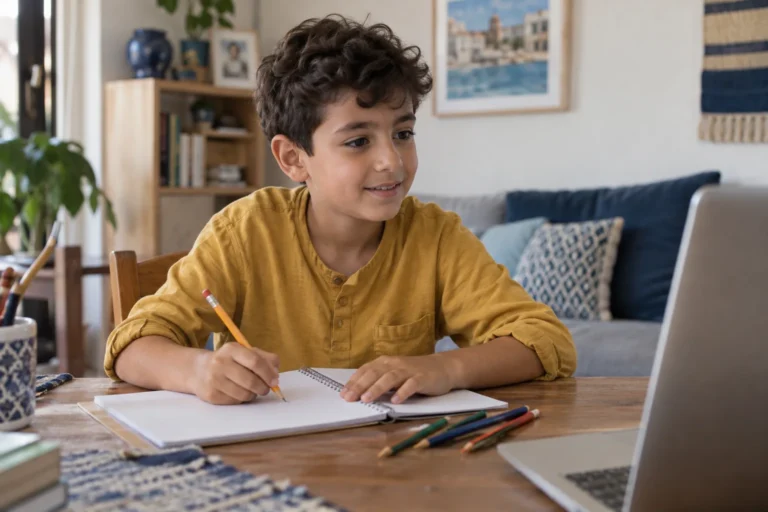
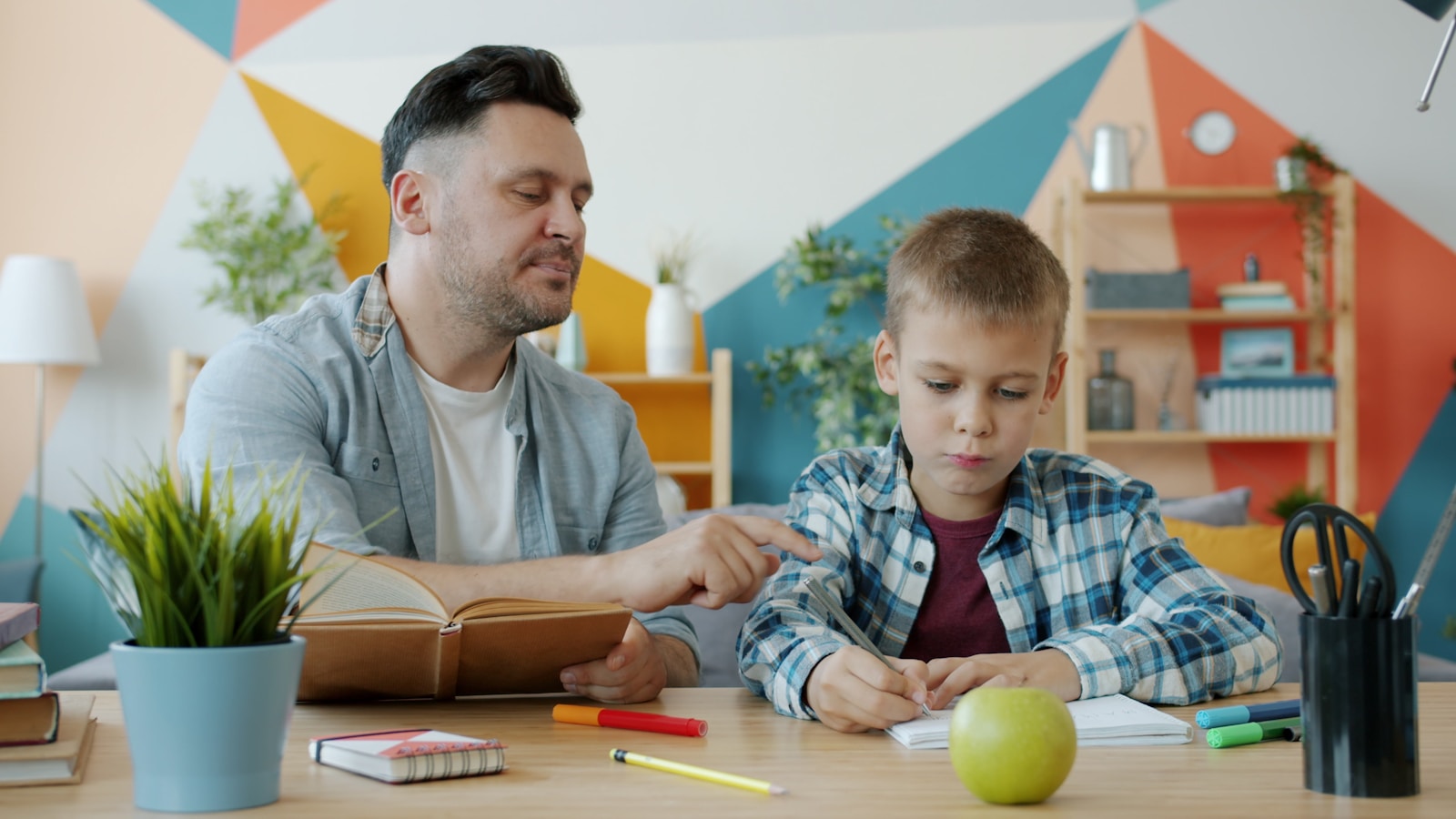
A parent can create the conditions for learning without explaining grammar. Help your child choose a time, open the right book or recording, remove distractions and return to the activity regularly. Ask what a phrase means, invite them to teach you one word and show that mistakes are allowed.
Keep roles clear. If neither of you knows the pronunciation, check a trusted recording rather than guessing with confidence. If schoolwork includes a rule you do not understand, write down the question for the school or teacher. This is more useful than turning the evening into an argument over an uncertain answer.
Build a short French routine your family can keep
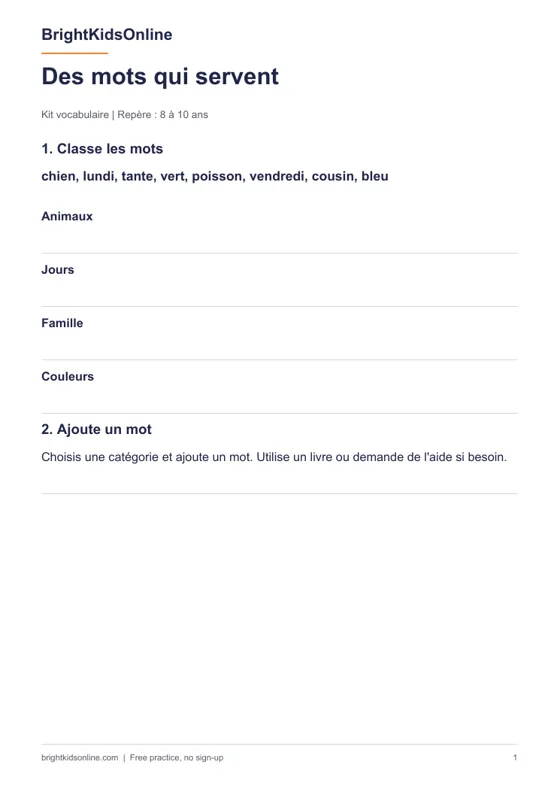
Consistency matters more than an ambitious plan that lasts three days. Choose a small activity and attach it to an existing moment. The routine might be a French song while preparing breakfast, five picture cards after school, a short page before bed or a weekend recipe with a few French ingredient words.
With a younger child, use objects, pictures, actions and a few repeated phrases. As children grow, add short descriptions, simple questions, a phrase notebook or a retelling of a short clip. Older children often respond better when French is connected to music, culture, a hobby or a conversation they could genuinely use.
Give your child French they can hear and understand
When the parent is not fluent, good input matters. Look for age-appropriate recordings with clear speech, a transcript or subtitles where possible, and content short enough to hear more than once. Public libraries, school recommendations and reputable language-learning organisations are sensible starting points.
Do not turn every video into a quiz. First let your child follow the story or idea. On a second listen, notice one repeated expression. On a third, pause and say it together if the child is willing. Understanding grows through meaningful repetition, not constant testing.
Encourage conversation even when you cannot correct it
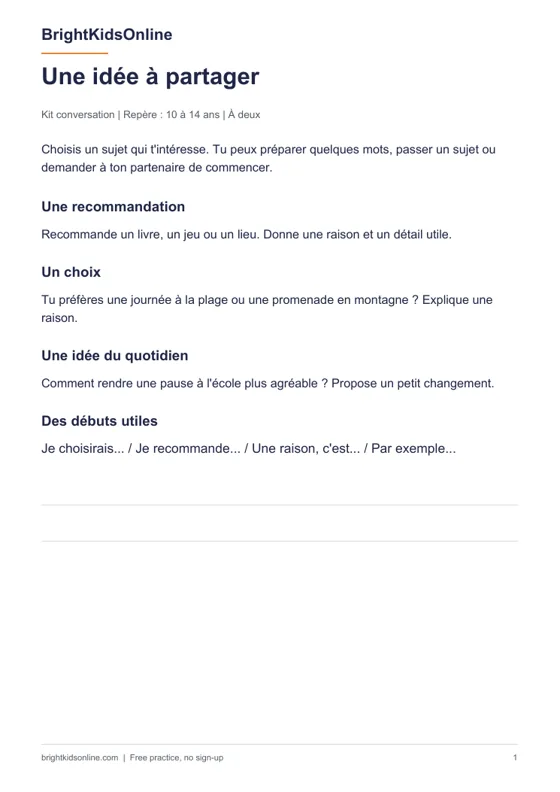
You can prompt French without judging every sentence. Point to a choice and ask, “How would you say this one?” Let your child order pretend food, introduce a toy, describe a drawing or teach you the rules of a tiny French game. Respond to the meaning first. If every attempt receives immediate correction, a cautious child may decide that silence is safer.
Invite correction from a reliable source later. You could save one uncertain sentence for the next lesson. This keeps the conversation moving while still respecting accurate French.
What usually makes home practice harder
- Correcting every sound while the child is trying to finish an idea.
- Using French only when school results are disappointing.
- Comparing the child with a sibling or fluent friend.
- Choosing content designed for adults because it looks more serious.
- Expecting the child to speak on demand for visitors.
- Starting several apps and books without returning to any of them.
If your child seems to understand French but avoids answering in it, read why a child may understand French but rarely speak. The issue may be confidence, time to formulate a response or simply a lack of low-pressure opportunities.
When a French teacher adds value
A teacher can provide a consistent language model, choose material at the right level and turn passive knowledge into guided conversation. The parent can then support a small practice point between lessons without carrying the whole teaching responsibility.
In my online French lessons for children aged 6 to 14, I adapt games, conversation and activities to the learner’s level and needs. Parents can share what they see at home, and I can suggest a focused practice idea that fits the current lesson. If you would like to see whether the approach feels right, book a free introductory session.
Sources and further reading
- Manitoba Education: How to support my child’s French-language learning
- Language Portal of Canada: Resources for learning French
- American Speech-Language-Hearing Association: Learning more than one language
Something to try together
Common questions
What parents often ask
You can avoid being the only pronunciation model by using reliable recordings and a teacher. Your encouragement, routines and willingness to learn alongside your child are still valuable.
Choose a short period your family can repeat comfortably. A focused, enjoyable routine is more sustainable than a long session that causes resistance. Adjust the length to your child’s age and attention.
No. Let your child finish the idea and respond to the meaning first. Choose one useful correction at a time, or save uncertain language to check with a reliable source or teacher.