
Free printable PDF
Sound detectives
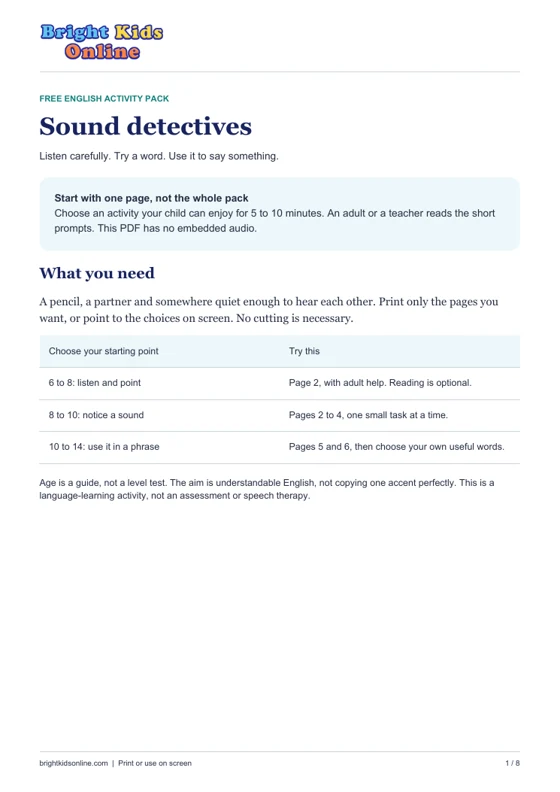
8 A4 pages with English instructions, practical activities and answers. No sign-up.
Print the pages you need or use them on screen. Sound models are linked; no audio is embedded.
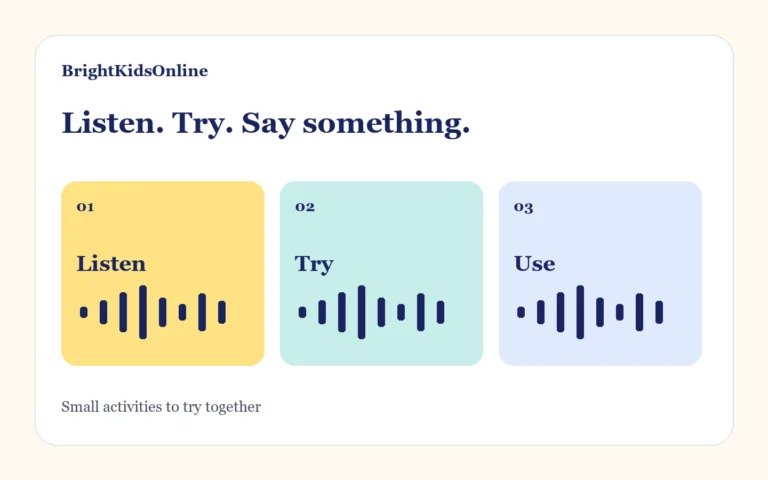
English pronunciation games work best when children listen for a difference and use it for a small purpose. Start with one pair of words, let your child point before speaking and stop after a few enjoyable turns. The five games below practise different things; you do not need to do them all.
The printable has English instructions and an adult partner page. Its age suggestions cover 6 to 14, but the right task depends on your child’s English and interests. The French version has French instructions with the same English learning examples. There is no audio inside the file.
1. Sound detective: ship or sheep?
You need: two simple pictures, one of a ship and one of a sheep. Draw them yourself if you like. Check the words using the British or American recordings in Cambridge Dictionary and use the same model for both.
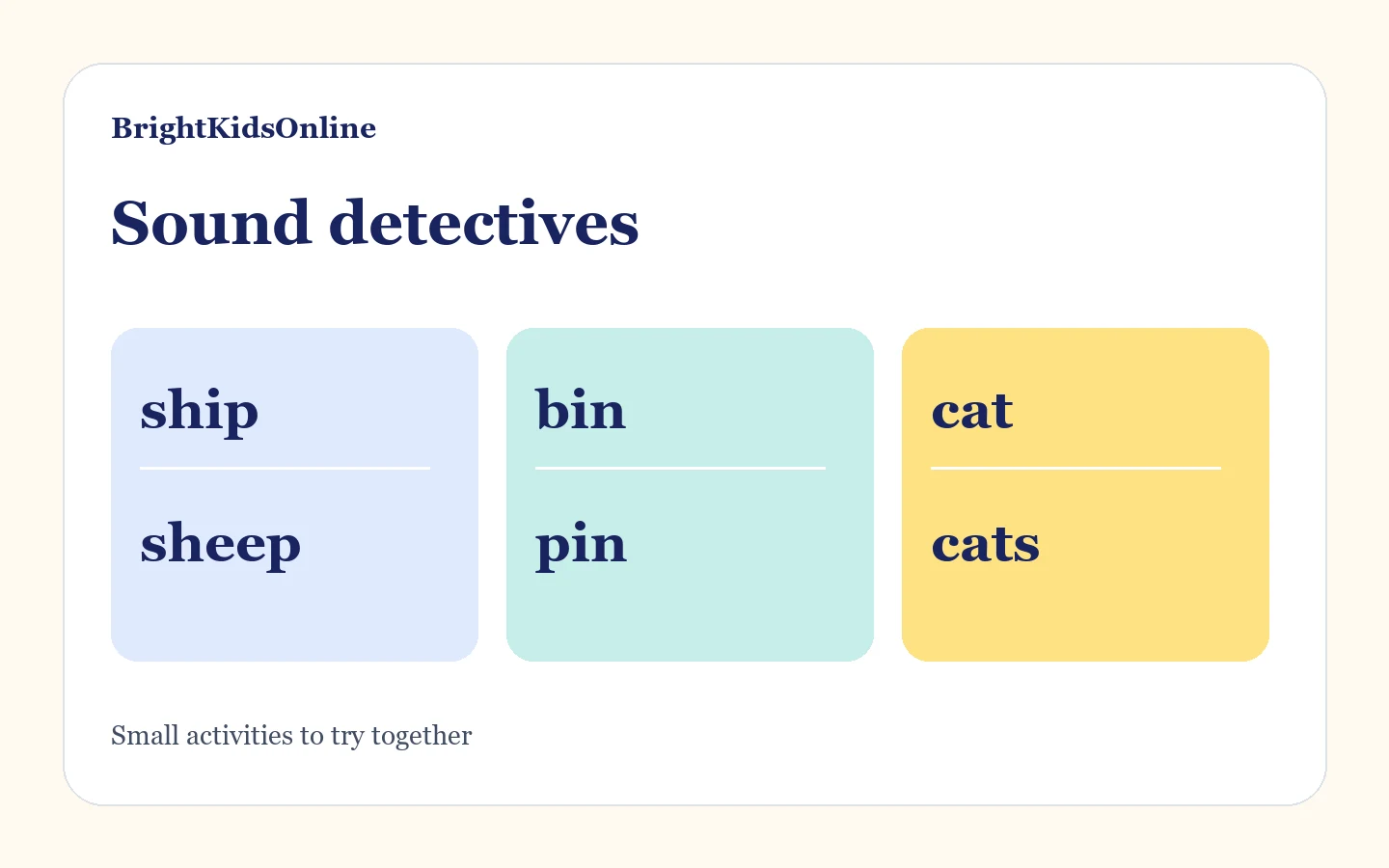
Say one word while your child points to the picture. Mix the order. When the difference becomes easier to hear, swap roles. Your child can say one word, then a phrase: “I can see a sheep.” The vowel quality changes as well as its usual duration, so “make it longer” is not the whole explanation.
Make it easier: show the answer while modelling the word, then hide it for the next turn. Make it richer: add sit and seat, acting out the first and pointing to a chair for the second. Keep the words connected to their meanings.
2. A small beginning: bin or pin?
Draw a bin and a pin; do not use a sharp pin as a prop. Listen to the two words. Both begin with the lips closing and opening. The voice starts with bin; pin usually begins with a small puff of air. Your child can hold a hand in front of their own mouth to notice the difference without forcing it.
Read the four prompts on the printable’s answer page. Ask your child to circle the word they hear. Then give the word a job: “Put the paper in the bin.” If they cannot hear the contrast yet, return to listening rather than asking for repeated production.
3. Hidden drawings: one cat or two cats?
Each person secretly draws one cat or two cats. Take turns describing the picture: “I can see two cats.” The listener draws what they hear. Compare the two pictures, then try map/maps or bike/bikes.
These examples share a quiet final /s/ sound. Listen for the ending without adding another vowel. The task is not to learn every English plural pronunciation at once. It is to notice that a small ending can change what a partner understands.
4. Tap the word rhythm
Choose apple, teacher, banana and computer. Listen to a model, tap once per syllable and notice the stronger part: AP-ple, TEACH-er, ba-NA-na, com-PU-ter. Capitals mark stress, not shouting.
Let your child circle the stressed part on page 5. Then say something with the word: “My teacher is kind.” A child who is not reading can simply listen and tap. An older learner can add a word from a topic they choose and check it in the dictionary.
5. Send a message your partner needs
Read the picnic dialogue in the pack, one role each. Then close it and change one detail. “Is this seat free?” “Yes. Please sit here.” “What can you see?” Give your partner a real reason to listen by referring to your own drawing or something in the room.
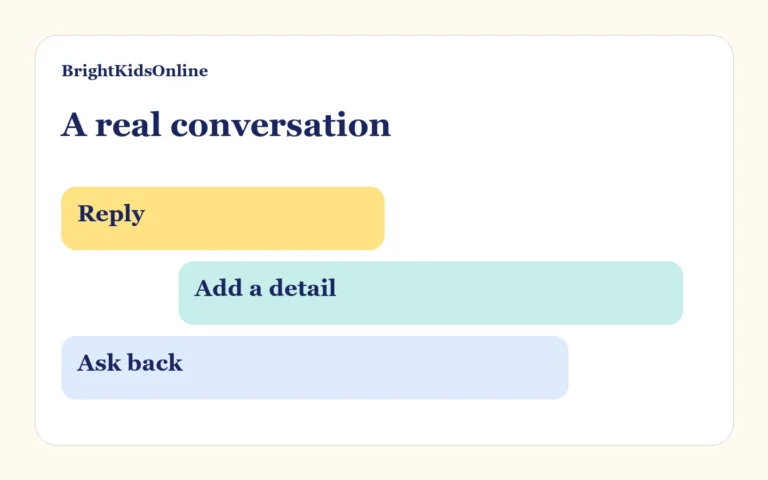
Ask one follow-up question rather than correcting every sound. If a word is unclear, check it: “Did you say cat or cats?” The conversation activity pack helps children move from a reply to a detail and a question back.
Which game should I choose?
- Ages 6 to 8: start with picture choices and pointing. An adult can read every prompt.
- Ages 8 to 10: try hidden drawings and short instructions.
- Ages 10 to 12: combine a sound choice with a question or a plan.
- Ages 12 to 14: use words from hobbies and situations your child actually wants to discuss.
These are options, not age milestones. One child may need a simpler listening task; another may want a more independent dialogue. If your child becomes uncomfortable, choose a smaller step or return another day.
Keep it supportive
Model first, allow thinking time and respond to the message. Avoid judging an accent as good or bad. For a short routine and ways to give feedback, read how to help with English pronunciation at home. For a reluctant speaker, begin with speaking confidence without pressure.
If your child would benefit from a patient conversation partner, explore my English lessons for ages 6 to 14 or book a free introduction. We can discuss what feels useful for your child. This pack is for English learning, not for diagnosing or treating speech difficulties.
Further reading
Common questions
What parents often ask
Yes. View a page on screen, point to a choice and write answers on separate paper if needed. A partner reads the short listening prompts from the final page.
No. It includes links to dictionary sound models and an adult reading script. Listen to a reliable recording together when you are unsure of a word.
No. Choose one useful game and keep it short. You can repeat it with a new message or choose another activity on a different day.